1-to-1 Mentorship

You don’t need more
information.
You need someone
who’s been there.

Uncle Vinny is a whole-life mentorship for people who are capable, already trying, and still not getting where they want to go. Not tactics. Not a framework. Guidance from lived experience — matched precisely to you.

Apply for Mentorship

Limited spots available · $1,000/month · Ongoing engagement


Verify for yourself

You recognize yourself
in any of these

Most people who come to me
don’t know yet what they want to build.

We live in a world of infinite possibilities and infinite noise. The sheer abundance of options — business models, platforms, strategies, opportunities — makes it harder than ever to choose anything at all. The more paths are available, the more paralyzed we become. This is the paradox of choice, and it’s not a personal failing. It’s the condition everyone is operating in.

The worst response to this paralysis — and the most common one — is to try to think your way out of it. To get stuck in your head, turning the question over and over, hoping that eventually the right answer will crystallize. It almost never does. Clarity doesn’t come from more thinking in isolation. It comes from meaningful conversation with someone who listens carefully, asks the right questions, and reflects back what they hear with honesty and experience.

This is where we begin. I listen. I ask. I push back. Over the course of several conversations, a clearer picture starts to emerge — not because I impose a direction, but because the right questions, asked by the right person, help you hear yourself more clearly. I’ve seen this happen with a lawyer who became a digital entrepreneur, with software developers who had never sold a thing. It’s how the work starts.

And even when someone arrives knowing what they want, there’s a second layer of confusion waiting: strategy. Because no matter what you’re trying to build, the internet will offer you a thousand paths, a thousand promises, and a thousand people telling you their way is the only way. Choosing the right path — and staying on it while ignoring everything else — is one of the hardest things to do alone.

Here’s the distinction I come back to constantly in my work: effective versus efficient. Efficiency is about how to do something. Effectiveness is about whether you’re doing the right thing in the first place. Most people obsess over efficiency. They optimize, they systematize, they execute — on the wrong thing. It is entirely possible to do the wrong thing perfectly.

My job is to make sure you’re effective first. That means relentlessly filtering — eliminating what’s unnecessary, what’s a distraction, what only feels productive — until we can see clearly the few actions that will actually move you toward what you want. Only then does efficiency matter. And at that point, it matters enormously.

So if you don’t know yet what you want to build: good. Come as you are. That’s where the work starts.

The entrepreneur will be as good as the underlying person is.

Most mentorship programs treat you like a business problem to be solved. They give you a funnel, a script, a system — and send you off to execute it. When it doesn’t work, they assume you didn’t follow the system closely enough.

That’s not how I work. Before you are an entrepreneur, you are a person. A real person with a history, a set of fears, a definition of success that may or may not be your own, relationships that matter, and a life that needs to make sense as a whole.

The guidance I offer draws on everything that actually helps people change: entrepreneurship, yes — but also ancient philosophy, literature, mythology, history, and the kind of hard-won wisdom that only comes from living deliberately through failure and reinvention.

The goal isn’t to make you a better marketer. It’s to make you clearer, stronger, and wiser — so that whatever you’re building actually gets built, and actually matters.

Possibly both.
They’re not the same thing.

A therapist, as I understand it, helps you look inward more clearly — to understand what’s happening inside you, where certain patterns come from, what you’re carrying. That’s valuable work. It’s just not what I do.

What I do is almost the opposite. I try to get you to look outward — as far and as wide as possible. Because one of the most powerful things that can happen to a person who feels stuck is a genuine shift in perspective. Not a reframe engineered in a therapy room, but the kind that comes from realizing how vast the world is and how much of what you take for granted is actually extraordinary.

I’m spending time in Sarajevo right now. Thirty years ago, this city endured a four-year siege. People dodged sniper fire just to reach a market or find water. Food was scarce. People died for no reason, every day, for years. That wasn’t ancient history. The people walking these streets around me lived through it. When I remember that and look at my own challenges, something shifts. My burdens feel lighter. My gratitude deepens. My impatience with myself becomes harder to justify.

This is what I mean by perspective. Religious texts, philosophy, literature, mythology, travel — these are not decorative additions to the work. They are the work. They are how human beings have always helped each other see their lives from a different angle, find courage, and move forward.

There is also a second difference, a more practical one. I’m not here only for meaningful conversation. I’m here to teach. Twenty-five years of building businesses, failing, rebuilding, and figuring out what actually works — that accumulated knowledge transfers directly to you. I help you develop the specific skills that turn an idea into a functioning business. That is a very specific destination, and I know the road.

So: if you’re dealing with a clinical condition, please see a therapist. That’s not my domain and I wouldn’t pretend otherwise. But if you’re someone who is fundamentally healthy, capable, and hungry for a different kind of life — and what you need is broader perspective, honest guidance, and someone who has built the thing you’re trying to build — that’s where I come in.

“Most people who get stuck don’t lack drive. They lack the right guidance — matched precisely to who they are and where they actually are.”
— Vinícius Manhães Teles, Uncle Vinny

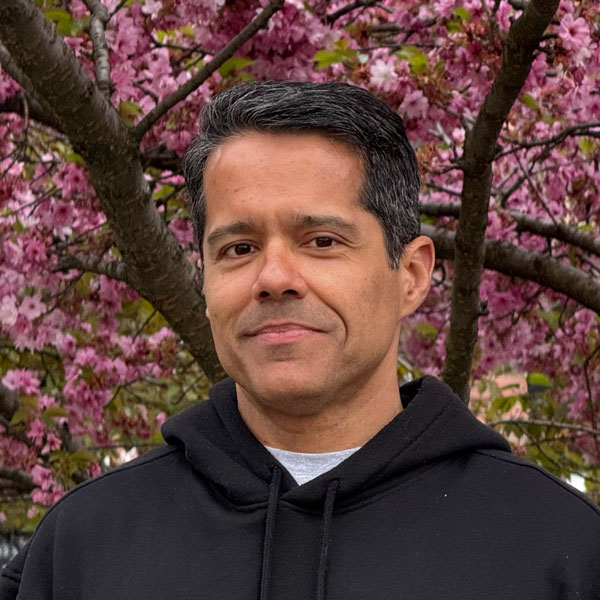
I’m Vinícius.
My nephews call me
Tio Vivi.

When I was becoming an adult, some of the most valuable guidance I received didn’t come from my father. It came from older men I worked alongside — people who could see my potential, shared my interests, and were genuinely glad to offer what they knew. They weren’t my real uncles. But looking back, that’s exactly the role they played.

I’ve thought a lot about why that relationship worked when others didn’t. And I think it comes down to this: a good uncle occupies a rare position. He cares deeply — genuinely, not professionally — but he carries none of the weight that parents carry. He doesn’t have to feed you, protect you, discipline you, or turn you into a civilized person. That burden belongs to your parents. The uncle is free of it. And that freedom changes everything.

Because there’s no baggage, there’s no fear. A nephew will say things to an uncle he’d never say to his father — because there’s no punishment coming, no disappointment to manage, no complicated history in the room. And the uncle, in turn, can be honest in ways a parent sometimes can’t. He can support the crazy idea. He can say the uncomfortable thing. He can tell you the truth without it becoming a whole thing.

Parents tend to be protective, sometimes to a fault. When you tell them you want to leave your stable job and build a business, their instinct is often to talk you out of it — because they love you, and because risk frightens them on your behalf. A good uncle reacts differently. He takes the idea seriously. He engages with it. He helps you think it through rather than helping you abandon it.

Most people don’t have a close uncle in their lives anymore. Families are smaller, more scattered. The role has quietly disappeared — and with it, a kind of guidance that was once completely natural: older, more experienced, genuinely caring, and not constrained to any single domain. Not just career advice. Not just business advice. Life, as a whole.

That’s the role I want to play.

But there’s a second layer. Because “uncle” alone doesn’t capture everything. The other frame is the apprenticeship.

In the past, a cobbler might take on a nephew as an apprentice. As an uncle, he’d offer guidance on life — how to carry yourself, how to treat people, how to think about what matters. But as a master of his craft, he’d also teach the specific skills of the work itself. The apprentice got both: the life wisdom and the professional knowledge, woven together naturally, learned by working alongside someone who actually knew how to do the thing.

That’s the combination I’m aiming for. Whole-life guidance from someone who genuinely cares, plus concrete skill transfer from someone who has actually done what you’re trying to do.

That last part matters to me more than I can easily express. I have a deep impatience with mentors who tell you what to do but can’t show you how — because, if you pressed them, they don’t really know. I’ve been on the receiving end of that, and it’s maddening. When I work with someone, I teach the how. Thoroughly. I show it, not just name it. That’s what a real apprenticeship looks like. That’s what I offer.

Uncle Vinny, then, is not a coach with a methodology. Not a guru with a following. Not an expert dispensing frameworks from a distance. It’s an attempt to revive something older and more human — the figure of the knowledgeable, caring elder who walks alongside you, tells you the truth, shows you the craft, and wants, genuinely, for your life to go well.

25
Years as an entrepreneur
15
Years as a digital nomad
74
Countries visited with my wife
8
Years mentoring 1-to-1
50
Years of lived experience
2
Books written

The wrong question
to ask a mentor

When people think about successful entrepreneurs, the same names come up: Gates, Jobs, Musk, Bezos. Billionaires. Builders of empires. People whose companies reshaped industries and consumed their entire lives in the process.

So when someone considers hiring a business mentor, they sometimes apply the same logic: find the person with the biggest company, the highest revenue, the most impressive exit. Measure credibility in billions.

I’d invite you to question that logic — because it reveals a confusion about what success in business actually means.

Ask most people what they actually want when they imagine building a business, and the answer almost never sounds like Elon Musk’s life. It sounds more like this: I want to control my own time. I want to work on projects I choose, with people I choose. I want to take my kids to school, travel when I want, live where I want. I want to stop trading my hours for someone else’s agenda. I want freedom — real freedom, not the kind you’re promised and never quite get.

That’s not a billion-dollar ambition. That’s a human one. And it doesn’t require a billion-dollar business to fulfill.

My businesses have always been built around that principle. Not to grow as large as possible, but to be profitable enough, sustainable enough, and simple enough to fund the life I actually want — while leaving me time and energy to live it. A SaaS that ran on autopilot for eight years. Books that still sell. A mentorship practice I find genuinely meaningful. Fifteen years of living and working freely across 74 countries with my wife.

I don’t measure success only in revenue. I measure it in contribution — to the people I work with, to the work itself — balanced against what it costs in time, energy, and freedom. Every dollar has a cost attached to it. I try to make sure the cost never exceeds the benefit.

This is also the philosophy I bring to the people I work with. If you want to build something massive that consumes everything, I’m probably not the right mentor. I don’t practice it myself, and I wouldn’t be honest with you about it if I pretended otherwise. But if what you want is a business that serves people well and gives you back your life, that’s territory I know deeply. I’ve been living inside that question for 25 years.

So: am I ultra-wealthy by the standards of Silicon Valley? No. Am I free? Completely. Have I built businesses that worked — that funded a life I chose, on my terms, for decades? Yes.

Whether that counts as success depends entirely on what you’re trying to build. If your definition of success looks like mine, I can help you get there. If it doesn’t, you probably already know we’re not the right fit.

Why most mentorship fails —
and what I do differently

If you’ve hired a mentor or coach before and walked away with inspiration but not results, I’d guess the problem wasn’t your commitment. Here’s what I’ve seen go wrong — and how I’ve built this to avoid every one of those failure modes.

You get me.
Not an assistant.

Many accomplished mentors have hundreds or thousands of students. The math doesn’t work — they can’t know you, so they hire assistants to manage you instead. Those assistants are rarely as knowledgeable as the mentor, and sometimes not knowledgeable at all. When you work with me, every message, every call, every response comes from me directly. That’s the only way this works.

The medium
matches the message.

Most programs offer one communication channel — usually text. But text has real limits. When you have a simple question, I’ll text you back. When something needs nuance and context, I’ll send a voice message — sometimes a long one, full of detail. When I need to show you something, I’ll record a Loom. I use whatever gets the idea across most clearly, because that’s what actually helps.

I come to know
you deeply.

In most programs, you’re one of many faces in a group. Nobody ever comes to really know you — your specific situation, your history, your particular way of getting stuck. I carry your context. Over time, I build a real picture of who you are and what you need. That depth is what makes the guidance precise instead of generic. It’s what separates a mentor from a search engine.

We talk about
the whole life.

Almost every business mentorship I’ve attended was one-dimensional: make more money, full stop. Nobody ever asked how much is enough, or what the money is actually for, or what you’re giving up to get it. I’ve seen people reach their financial goals and still feel empty. I won’t pretend business exists in a vacuum. We’ll talk about what matters to you — all of it — because a business built on a shaky life eventually shows it.

Experience,
not theory.

My authority comes from having done it: built businesses, failed, rebuilt, traveled the world from a laptop, reshaped my health, navigated hard family years, and come through with a life I chose deliberately. I draw on ancient philosophy, literature, mythology, and history — not because they sound impressive, but because those are the sources that have actually moved people forward across centuries. That’s the kind of knowledge that transfers.

Depth,
not speed.

I’m not glued to my phone. I don’t respond instantly, and I won’t pretend otherwise. What I will do is read your message carefully, think about it, and give you a response that is actually worth reading — precise, considered, and tailored to what you’re facing. Most of the time that means a response within a day, sometimes two. It’s never about speed with me. It’s always about quality of attention. If you need someone available at all hours for instant replies, I’m probably not the right fit. If you’d rather wait a day for an answer that actually moves you forward, we’ll get along well.

Most mentors are stretched thin.
Here’s why I’m not.

Most people — not just mentors, but most people — complicate their lives. They accumulate responsibilities, expenses, and obligations in an almost automatic way, as if busyness were a measure of worth. They say yes to everything. They optimize for maximum income with no thought for what it costs them in time, attention, and energy.

I made a different choice a long time ago.

I’ve spent 15 years deliberately simplifying. Not as a sacrifice — as a preference. My wife and I live from our laptops, travel slowly, and keep our obligations lean. I guard my time the way most people guard their money. I’m always asking what I can remove from my life, not what I can add. The result is that I have something most people in my position don’t: genuine availability.

When I take on a new student, they get real attention — not the leftover attention of someone who has overcommitted everywhere else. I respond within a day or two, not because I set a timer, but because I’ve built a life where that’s simply possible.

This is also, not coincidentally, part of what I teach. The clearer you are about what matters, the less you need to do to have a life that works. I can only teach that credibly because I live it.

Simple, close, ongoing

01

You apply

Fill out a short application so I understand where you are and what you’re trying to build. If I think I can genuinely help, I’ll invite you to a one-hour conversation.

02

We talk

A real conversation — no sales pitch, no pressure. I want to understand your specific situation, and you should understand exactly how I work before committing to anything.

03

The probation month

The first month is a trial period — openly, honestly that. You pay $1,000 and we work together properly: real calls, real challenges, real guidance. By the end of the month, you’ll know whether this relationship is giving you what you need. I’ll know whether I’m the right mentor for where you’re going. If either of us decides not to continue, the $1,000 is returned in full. No questions asked.

04

We commit and go deep

If we both choose to continue, the engagement shifts. You choose how to pay — monthly or annual. I commit to working with you for a full year. Not a conditional commitment — a real one. I won’t step away because something better came along or because the work gets harder. You have my word on that.

05

You build, practice, and get results

I teach you what you need. You apply it. When it doesn’t work perfectly the first time — which it won’t — we adjust. Results come through repetition and refinement, and I stay with you through that entire arc.

I don’t know yet.
That’s what the interview is for.

In 8 years of mentoring, I’ve worked with people from dozens of industries, at every life stage, with every level of business experience from zero to seasoned. The range is wide. What I’ve learned is that the specific situation matters far less than most people think. What matters far more is the person behind it.

I’m not an alchemist. I can’t turn lead into gold. What I can do is find gold and help polish it. Some people have what it takes. Some don’t. My job in the interview is to figure out which one you are — and to be honest with both of us about what I find.

What I’m actually looking for:

Humility

I can’t guide someone who already knows the way. If you arrive convinced you have all the answers, there’s nothing I can add.

Openness

Everyone arrives with preconceived ideas about how things should work. Most will need to be tested and revised. The people who do well here hold their assumptions loosely.

Accountability

If every setback is someone else’s fault, we won’t get far. The people who succeed take ownership of their circumstances — even the ones they didn’t create.

Perseverance

There will be setbacks. There will be moments when nothing seems to be working. If you fold at the first hurdle, I can’t help you. If you get back up, we have something to work with.

Conscientiousness

You have to do what you say you’ll do. Not perfectly — but consistently.

Urgency

Not the “it would be nice to have a business someday” kind. The “I can’t keep living like this” kind. The people who do best here are the ones who have already waited too long — who are so done with the current state of things that they’re ready to endure the discomfort of change because staying the same has become more painful than moving forward. Those are my people.

I don’t expect you to arrive with business skills. That’s what I’m here for. But I do need the right attitude. That’s the one thing I can’t teach.

If that sounds like you, I’d like to talk. The interview is one hour — a real conversation. I’ll be trying to understand you, and you should be trying to understand me. If it’s a fit, we’ll both know.

Failure isn’t disqualifying.
It’s often the precondition.

So you’ve tried before and it didn’t work. You’re afraid to fail again. Welcome to the club — you’re not alone, and it doesn’t disqualify you.

I spent most of my life overweight. Like most people in that situation, I tried many diets over the years, with mixed results. I’d lose weight and gain it back. I’d start strong and fade. It seemed like a problem I’d never truly solve. Until I did — several years ago — and have kept it off ever since.

What changed? Not the diet. Me.

The person who succeeded on that last attempt wasn’t the same person who had failed on the previous ones. Over the years, the accumulated failures had slowly done their work. They made me more humble. More honest about what I didn’t know. More willing to trust the specialists I hired instead of second-guessing their advice with my own half-formed opinions. Where I used to tweak and resist, I now listened and executed. The failures hadn’t broken me. They had prepared me.

I think about this often when someone comes to me carrying the weight of a previous attempt that didn’t work out. Because what I usually see is not someone who is broken or fundamentally incapable. I see someone who has been through the process once, learned things they couldn’t have learned any other way, and arrived — perhaps without realizing it — in a better position than someone who has never tried at all.

My own approach to failure has evolved into something that might sound strange at first: I try to fail as fast and as frequently as possible. Small, frequent failures are far more useful than the slow, expensive kind. They tell you what doesn’t work quickly, so you can pivot to what does. They are not to be feared. They are to be used.

The only failure worth truly fearing is the fatal kind — the one you can’t recover from. As long as you’re still standing, still willing, still able to reflect on what happened and adjust, the failure has done its job. You haven’t wasted your past attempts. You’ve been paying tuition.

Have you failed before? Good. It means you’ve tried — which is more than most people ever do. Come as you are.

Your situation isn’t too niche.
It might be your biggest advantage.

There’s an old saying in marketing: it’s better to be different than to be better. Better is relative. Different is visible.

Most people experience their own uniqueness as a liability. They look at the crowded middle of any market and assume they need to fit in to succeed — that their unusual background, their specific circumstances, their unconventional path is something to apologize for or paper over. I think the opposite is true.

The internet didn’t just change how business works. It changed who business works for. A few decades ago, making money meant selling something ordinary to a very large number of people. Today, there are thriving businesses built around remarkably specific things — serving small, devoted audiences in ways that make complete sense to those audiences and would mean nothing to anyone else. You don’t need to reach everyone. You need to reach your people.

This is why I don’t expect you to arrive with a situation that looks like someone else’s. I count on each person being different. Different backgrounds, different constraints, different goals, different markets. I’ve worked with lawyers wanting to become digital entrepreneurs, software developers who couldn’t sell a thing, people reinventing themselves mid-career in ways that had no obvious playbook. What they had in common wasn’t their situation. It was their seriousness.

Your specific circumstances aren’t an obstacle to work around. They’re the raw material we start with. And often, what looks like a complication from the inside turns out — once you’ve found the right angle — to be exactly what makes you interesting to the right people.

People who took the leap

The lawyer who became a digital entrepreneur

She was a successful lawyer who loved to travel. By 30, she had already visited many countries on her own. She knew she wanted out of law and into a business of her own — but she had no idea how to make that real.

Together, we identified her edge: she had done what thousands of women desperately wanted to do but were too afraid to try. We built a program around that — teaching women to overcome the fear of traveling the world alone.

She sold that program repeatedly over the years, helping many women see the world for the first time. She did all of this while traveling overland herself — from the southern tip of South America all the way north to Alaska.

She eventually left law entirely and works full time in her own business. The life she wanted, she built — with the right guidance and the willingness to do the work.

Quit law
Full-time in her own business
Patagonia → Alaska
Built her business while living it
The developers who couldn’t sell

Two experienced software developers who had known each other since university decided to build an online business together. They tried for two years. They made zero sales.

When they came to me, the problem wasn’t their competence — they were technically excellent. The problem was they had no framework for selling. They didn’t know how to position, structure, or market what they knew.

We identified an underserved gap: junior developers struggling to land their first job. We built a structured program around that, developed a system for selling it online, and on their very first attempt, they sold to 13 people.

They’ve run monthly campaigns ever since. Over two years, they’ve sold their program to more than 1,200 students and generated nearly $400,000 USD in revenue. Hundreds of those students have landed their first job in tech.

1,200+
Students enrolled
~$400K
In online sales
0 → 13
Sales on their very first launch

Why you won’t find
video testimonials here

I made a deliberate choice not to publish video testimonials from my students — and I want to be honest about why.

The first reason is that I no longer trust them myself. At this point in the history of the internet, testimonials are so routinely faked — paid for, staged, or generated entirely by AI — that I find it nearly impossible to take them at face value. I suspect I’m not alone in this. If I can’t trust what I see, I won’t ask you to either.

The second reason is that even a genuine testimonial has limited value. The person on screen is not you. Their background, their situation, their market, their starting point are different from yours. The fact that something worked for them doesn’t tell you much about whether it will work for you.

The third reason is privacy. The people I work with share things with me that are genuinely private — their struggles, their finances, their failures, their fears. That relationship carries a responsibility. Asking them to perform their transformation on camera so I can use it as a marketing asset feels like a violation of that responsibility. I’m not willing to do it, even when they’d agree to it. A mentor who treats his students’ private lives as marketing material is not a mentor I would want.

What I offer instead is this: if we get on a call, I’ll tell you real stories from people I’ve worked with. Not on camera, not by name — but in enough detail that you’ll be able to judge for yourself whether I’m telling the truth. You’ll hear it in my voice, not in a produced video. That’s a weaker form of proof by conventional marketing standards. I think it’s a more honest one.

What you get

  • One dedicated 1-to-1 video call per week
  • Unlimited messaging between sessions — text, voice, or video, depending on what the moment needs
  • A diagnosis of your specific gaps and a clear path forward
  • Guidance that covers the whole picture: business, life, priorities, and what actually matters to you
  • A 12-month engagement — enough time for real change to take root — with the freedom to cancel anytime
  • Direct access to 25 years of entrepreneurial experience across multiple industries and a life lived deliberately

This isn’t a course or a group program. There are no modules, no cohorts, no one-size-fits-all frameworks. It’s me, working closely with you, focused entirely on your situation, your gaps, and your goals — as a professional and as a person.

Start with one month.
Then decide.

The first month is a probation period — for both of us. You pay $1,000 to begin. We work together properly: real calls, real challenges, real guidance. By the end of that month, you’ll know whether this relationship is giving you what you need. If you decide not to continue, I return the full $1,000. No questions asked. If I decide the fit isn’t right from my side, I return it too.

First — always

$1,000 / first month

The probation month. Fully refundable if either of us decides not to continue. This is the only payment until we both choose to move forward.

If we continue — your choice

Monthly

$1,000 / month

Continue month by month. Cancel anytime. Price locked for the duration of your engagement.

Best value

Annual

$9,000 / year

Pay once after the probation month. Covers a full year — the equivalent of two months free. You remain free to cancel; unused months refunded.

Once the probation month ends and we both choose to continue, I make a commitment in return: I will work with you for the full year. Not a conditional commitment — a real one. I won’t step away because something better came along, or because the work gets harder. You have my word on that. The fear of being abandoned midway is real — and I want to remove it completely. You remain free to leave at any point. The commitment runs one way: from me to you.

Apply Now

Applications are reviewed personally. If accepted, you’ll receive an invitation to a one-hour conversation before any commitment is made.

What if we’re not
a good fit after we start?

The one-hour interview before we begin is thorough, but it isn’t magic. There’s only so much two people can learn about each other in a single conversation. That’s why the first month exists.

It’s a probation period — openly, honestly that. We work together for real during that month. Real calls, real guidance, real stakes. By the end of it, you’ll have a genuine sense of whether this is the right relationship for you. And I’ll have a genuine sense of whether I’m the right mentor for you. If it isn’t working — for either of us — we end it cleanly. Full refund, no complications. If we move forward, we do so with much more than hope. We do so with evidence.

What I ask during that month, and every month after, is honesty. If something isn’t working — my approach, the pace, the direction — tell me. Most of what looks like a fit problem is actually a communication problem, and those are solvable. What isn’t solvable is silence. If you’re disengaging quietly and waiting for things to change on their own, they won’t.

The qualities I described earlier — especially the willingness to be challenged and the sense of urgency — exist precisely because they predict fit. They’re not filters for “good students.” They’re there because I’ve seen how these relationships break down, and it almost always traces back to one of those things being absent.

There are no guarantees.
Here’s what there is.

Building a business is a discovery process. You start with a hypothesis — that there are people out there who want what you’re offering. Sometimes that hypothesis is right. Sometimes it isn’t, and you have to pivot until you find what the market actually responds to. This is the nature of entrepreneurship. It’s also the nature of most things that matter: finding a partner, recovering your health, rebuilding a career. Outcome depends on factors neither of us fully controls. Any mentor who promises otherwise is selling you the comfort of an illusion, and I’m not willing to do that.

What I can promise is my side of the equation.

I will listen carefully and pay close attention to your specific situation. I will tailor everything I do to what can make the most difference for you — not a generic framework applied to your circumstances. I will answer every question personally, with full attention. And I will be, in all likelihood, the last person in the room to give up on you. I tend to believe in my students more than they believe in themselves. That has always been true, and it doesn’t change.

Yes, there is a real risk that you invest time and money and don’t reach the specific goal you came in with. I want you to know that going in. But I’d ask you to consider what you will have gained regardless of outcome: the reflections, the reframing, the new perspectives, the skills, the honest conversations, and the experience of having someone genuinely in your corner through the attempt. Those things stay with you. They compound. And in many cases, they’re what make the goal reachable a little further down the road — even if it wasn’t reached during our time together.

I prefer to work with people who are clear-eyed about the nature of meaningful effort. People who understand that there are no shortcuts, no guarantees, and no one coming to save them — only better tools, clearer thinking, and someone who won’t give up on them.

Do the math.

Consider what you’re willing to invest to change your financial trajectory.

A four-year STEM degree in the US costs upwards of $100,000 — plus four years of your life. If it leads to a $100K salary, you might break even after another four years of work. Eight years to get back to zero. After that, you’re earning well — but within the limits the market sets on what any employer will ever pay you.

The mentorship costs $1,000/month. Over two years, that’s $24,000 — roughly a quarter of a university degree, with no lecture halls, no exams, and no one-size-fits-all curriculum. Just one experienced person, working closely with you, on your specific situation.

Two of my students — software developers who had spent two years failing to make a single sale — went from zero to nearly $400,000 in revenue over the following two years. Not in two weeks. Not in two months. Two years of real work, building real skills, reaching real customers. And they did it in Brazil — a market that is significantly smaller and less affluent than the US. The same approach, applied in the American market, has the potential to go considerably further.

Here’s what that actually means over time. If you develop the skills to sell — and keep practicing — those skills only sharpen. They don’t expire. They don’t get outsourced. They don’t have a salary ceiling imposed on them by someone else’s budget. A business you build is yours. If you “only” match what those two students achieved, and sustain it, you’re looking at $2 million over a decade. More over two. And unlike a salary, there is no upper limit.

But the return on this investment isn’t only financial.

When you own a business, you own your schedule. You decide how many hours you work, where you work, and with whom. You don’t commute. You don’t navigate office politics. You don’t answer to a structure that was designed for someone else’s convenience. The lived experience of being a business owner is qualitatively different from holding a job — not just in what you earn, but in how you spend your days.

My wife Pati and I have been living this way for 15 years. What made it possible — what makes it possible — is precisely that we own our businesses, which means we own our time. We’ve spent those 15 years across 74 countries, working from wherever we chose, building a life that fits us rather than fitting ourselves into a life that was handed to us.

For many people, this kind of freedom is worth more than any salary increase. The money matters. But the ability to design your own days — that’s what most people are really after when they say they want something different.

I’m not promising those numbers. I said earlier there are no guarantees, and I meant it. What I’m saying is this: if there’s a path to that kind of outcome for you, the investment required to find it is modest compared to the alternatives — and the upside of getting there is uncapped.

If $1,000/month is genuinely beyond your means right now, this probably isn’t the right moment, and I’d rather you come back when it is. But if the hesitation is really about whether the value justifies the cost — I’d invite you to do the math.

This is probably not for you if

I’d rather be clear about this upfront.

You don’t need to be ready.
You need to start — and this
time, not alone.

The most common reason people don’t start isn’t money. It’s that they don’t fully trust themselves to follow through — and after a few false starts, that’s a rational fear.

But here’s what I’ve noticed: in almost every case, the people who tried and didn’t make it were trying alone. And we dramatically underestimate how hard that is. Meaningful change — the kind that actually sticks — almost never happens in isolation.

I’ll be honest with you: I’m not sure I’d be where I am today without my wife Pati by my side. We built most of what we have together. The “together” part is not a small thing. It may be the whole thing.

So if you’ve tried before and it didn’t work, I’d ask you one question before you conclude that you’re the problem: were you alone? Because if you were, that might be most of the explanation right there.

What “waiting until I’m ready” looks like in practice, in my experience, is this: years pass, responsibilities accumulate, energy fades, and one day the thing you always meant to do becomes the thing you never did. The window doesn’t stay open forever.

Ready to stop navigating alone?

Apply below. Tell me where you are and what you’re trying to build. I read every application personally.

Apply for Mentorship

$1,000/month · Limited spots · No commitment until we’ve spoken